🇹🇭 Thailand · Pôle urbain
Hôpitaux à Bangkok
50 hôpitaux accrédités in Bangkok, Thailand accueillant des patients internationaux dans 14 spécialités. Comparez les établissements, les tarifs et les profils de médecins.
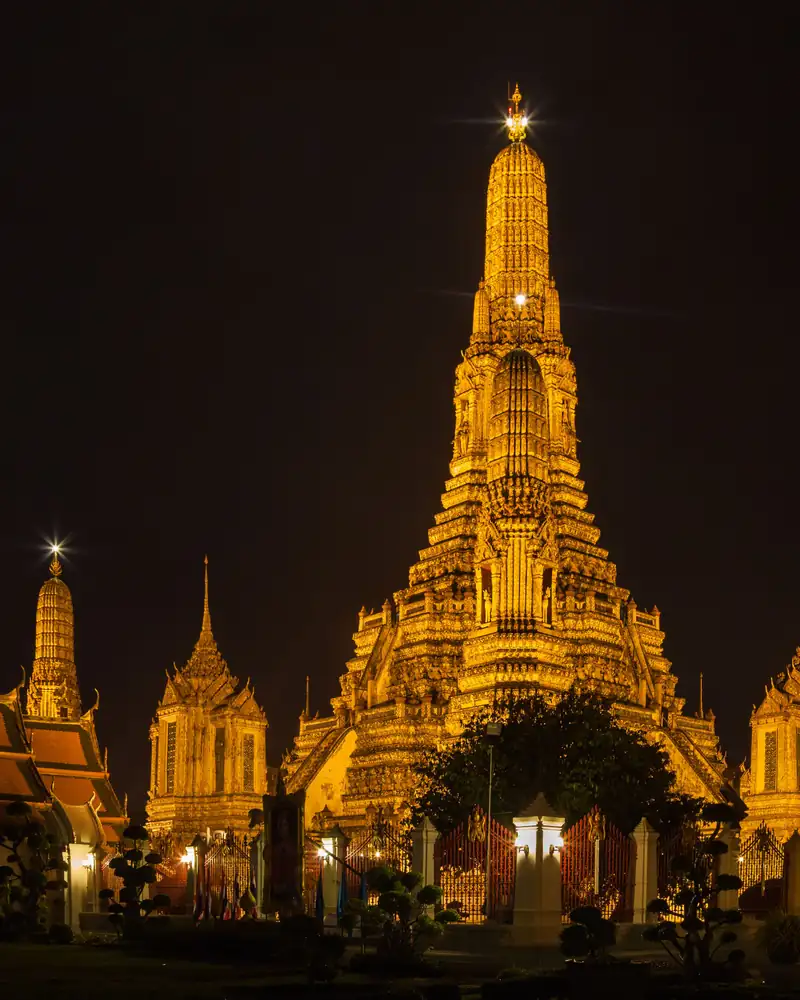
- Hôpitaux
- 50Hôpitaux
- Spécialités
- 14Spécialités
- Note moyenne
- 4.7Note moyenne
- Lits d'hospitalisation
- 1 130Lits d'hospitalisation
Dernière mise à jour: Nos sources et notre relecture
La ville en un coup d'œil
Informations pratiques pour planifier
- Aéroport le plus procheBKKSuvarnabhumi Intl
- LanguesThaiEnglish (in hospitals)
- Fuseau horaireICTUTC+7
- DeviseTHB ฿Bureau de change + distributeurs à l'aéroport
- Meilleure périodeNov–Febavoid Apr heat
Votre coordinateur de cas organise le transfert depuis l'aéroport, un hébergement adapté à la convalescence près de l'hôpital et une carte SIM locale si nécessaire. Les services de traduction sont inclus dans chaque devis — sans frais supplémentaires.
01 · Spécialités proposées
Ce pour quoi Bangkok est connue
02 · Les mieux notés
Hôpitaux de référence à Bangkok


03 · Répertoire complet
Tous les hôpitaux à Bangkok
- 07 Bangpo General Hospital
- 08 Phyathai Nawamin Hospital
- 09 Bangmod Hospital
- 10 Chulabhorn Hospital
- 11 MedPark Hospital
- 12 Navavej International Hospital
- 13 Chaophya Hospital
- 14 Bhumibol Adulyadej Hospital
- 15 Nakornthon Hospital
- 16 Anonymous MedConsult Clinic
- 17 Bang Khun Thian Geriatric Hospital
- 18 Sukhumvit hospital
- 19 Vimut Hospital
- 20 Piyavate Hospital
- 21 ViMUT-Theptarin Hospital
- 22 Ruamjairak hospital
- 23 Paolo Kaset Hospital
- 24 Praram 9 Hospital
- 25 Nopparat Rajathanee Hospital
- 26 Bumrungrad Hospital
- 27 Siriraj Hospital
- 28 Vajira Hospital
- 29 Saint Louis Hospital
- 30 Vibhavadi Hospital
- 31 Lerdsin Hospital
- 32 Mae Fah Luang University Hospital Bangkok
- 33 Phyathai 3 Hospital
- 34 Thonburi Hospital
- 35 โรงพยาบาล พญาไท 1
- 36 Huachiew TCM
- 37 Ramkhamhaeng Hospital
- 38 ศูนย์บริการสาธารณสุข 23 สี่พระยา
- 39 ศูนย์บริการสาธารณสุข 52 สามเสนนอก
- 40 Manarom Hospital
- 41 B.Care Medical Center
- 42 ศูนย์บริการสาธารณสุข 56 ทับเจริญ
- 43 Police General Hospital
- 44 Ramathibodi Hospital
- 45 Bangkok Metropolitan Administration General Hospital
- 46 Rajavithi Hospital
- 47 Siriraj Piyamaharajkarun Hospital
- 48 Yanhee Hospital
- 49 Thian Fah Foundation Hospital
- 50 Camillian Hospital
Plus en Thailand
Autres villes hospitalières en Thailand
Comparez Bangkok avec les autres villes de tourisme médical en Thailand.
Travel + recovery
Getting to Thailand and recovering well
Most nationalities get 30-60 days of visa-free entry to Thailand (recently extended to 60 days for 93 nationalities). The Medical Treatment Visa allows up to 90 days, extendable up to 1 year for chronic-care patients. The hospital's international patient department arranges the medical-visa support letter on request.
Bangkok Suvarnabhumi (BKK) and Don Mueang (DMK) handle direct flights from 100+ cities — every Asian capital, every major Australian city, the GCC, and a growing list of European long-hauls (Heathrow, CDG, FRA, ZRH, IST). Phuket and Chiang Mai have direct international connectivity for region-specific medical clusters.
Bangkok's medical hospitality is unmatched — Bumrungrad runs a partner InterContinental, BNH connects to Siri Sathorn, Samitivej operates dedicated recovery suites. Phuket's medical hotels include the Bangkok Hospital Phuket complex. Plan 10-14 days in-country between discharge and the flight home.
Bangkok is hot-humid year-round (28-35°C). Cool-dry season is November-February — preferred for surgical recovery. April-May (hot-dry) and June-October (rainy) are less comfortable. Phuket and Krabi have a similar profile but with sea-breeze relief.
Guide pratique de la ville
Guide pratique de Bangkok
Bangkok's medical infrastructure is unmatched in Southeast Asia for international patients. Bumrungrad International has been the global benchmark for medical tourism since the 1990s. Bangkok Hospital network has multiple specialty centers (Bangkok Heart, Bangkok Cancer, Bangkok International Dental).
International-patient services are exceptionally polished — multilingual staff (Thai, English, Arabic, Mandarin, Japanese, Russian), concierge-level coordination, and dedicated international wings at major hospitals.
The trade-off is cost — Thailand pricing is mid-tier (between Indian and Singapore/UAE pricing). For many procedures, the premium service experience justifies the cost difference; for cost-sensitive procedures, India offers better value.
Concentrations d'hôpitaux par quartier
Sukhumvit (Soi 3 area)
Bumrungrad International — flagship multi-specialty.
Phaholyothin
Bangkok Hospital, Phyathai 2.
Bangkok Heart Hospital area
Bangkok Heart Hospital, Praram 9.
Sukhumvit Soi 49
Samitivej Sukhumvit.
Various Sukhumvit
Bangkok International Dental Center, BIDH, BNH Hospital.
Aéroport + transports
Aéroport : Suvarnabhumi (BKK) primary; Don Mueang (DMK) for budget airlines.
BKK to Sukhumvit: 30-50 min. BKK to Phaholyothin: 35-55 min.
Top hospitals offer airport pickup with greeting service at arrivals. BKK-to-city Airport Rail Link is efficient and economical.
Climat
Tropical hot/humid year-round (25-35°C). Rainy season May-October. November-February is the dry, cooler season — optimal for recovery. April is the hottest month.
Où séjourner pendant la convalescence
Sukhumvit (Asok / Phrom Phong)
Premium hotels (Marriott, Hilton, Conrad), excellent for Bumrungrad and Samitivej. Walking-friendly with parks (Benjasiri).
Silom / Sathorn
Business district, premium hotels (Mandarin Oriental, St. Regis). Walking-friendly, restaurants, parks.
Lumpini area
Park-front accommodation, central.
Riverside
Premium riverside hotels (Mandarin Oriental, Peninsula, Shangri-La).
Activités adaptées à la convalescence
- Lumpini Park — central 142-acre park, walking paths.
- Benjasiri Park (Phrom Phong) — small modern park.
- Chao Phraya River cruise — relaxing, no walking required.
- Siam Paragon / IconSiam — climate-controlled luxury malls.
- Bangkok Art and Culture Centre — peaceful, walkable.
- Wat Pho / Wat Arun — historic temples (some walking).
- Rod Fai Night Market — vibrant, mid-distance walking.
Restauration + hébergement
Restauration : World-class restaurant scene — Thai, international, fine dining. Hospital food is excellent at major facilities. Tap water not safe; bottled everywhere. Halal options available; vegetarian abundant.
Hébergement : Premium ($200-500): Mandarin Oriental, Peninsula, Marriott Marquis, Conrad, Park Hyatt. Mid-tier ($80-200): Sheraton Sukhumvit, Hilton, Crowne Plaza, ibis. Service apartments common.
Notes pratiques
Excellent English at hospitals and tourist areas. Bangkok Tourist Police helpful. Cards widely accepted. Modest dress at temples. Beware tap water and ice from non-restaurant sources.
Méthodologie et règles éditoriales
Cet aperçu du tourisme médical à Bangkok est compilé à partir des hôpitaux que nous référençons dans la ville, avec l'accréditation indiquée lorsque nous en avons une trace, et des données de connectivité aérienne. Les conseils sur le climat et la durée de convalescence s'appuient sur l'expérience des coordinateurs qui accompagnent des patients à Bangkok toute l'année. La page indique sa date de mise à jour.
- Données des hôpitaux. Les informations hospitalières sont compilées à partir de sources publiques et des sites des hôpitaux. L'accréditation (JCI, NABH et autres) est indiquée lorsque nous en avons une trace. Demandez toujours à l'hôpital son certificat en cours.
- Qualifications des médecins. Qualifications, spécialité et biographie viennent du profil hospitalier du médecin. La licence n'est contrôlée sur le registre de l'ordre médical national que lorsque le profil affiche un badge « Licence vérifiée » avec une date.
- Prix. Les fourchettes de prix sont indicatives, compilées à partir des grilles tarifaires et forfaits des hôpitaux, avec leur date de mise à jour. Le devis écrit de l'hôpital fait foi pour ce que vous payez.
- Textes médicaux. Rédigé par l'équipe éditoriale Medcasts à partir de sources cliniques publiées. Sauf si un relecteur nommé figure sur la page, elle n'a pas été relue par un médecin.
- Indépendance. Les hôpitaux ne peuvent pas payer pour changer leur position sur nos pages.
Prochaine étape · Bangkok
Nous sommes prêts quand vous l'êtes.
Trois façons d'avancer. Choisissez celle qui vous convient maintenant.
Tourisme médical à Bangkok
Explorez Bangkok selon votre situation
Les mêmes hôpitaux, différentes approches. Choisissez l'angle qui correspond à votre décision — destination, spécialité, chirurgien ou logistique de visa.
- Hôpitaux Tous les hôpitaux à Bangkok 50 programmes à Bangkok, avec photos et tarifs.
- Destination Pôle hospitalier Thailand Programmes phares et références tarifaires dans Thailand.
- Visa Visa médical Thailand Documents requis, délais de traitement, conseils consulaires.
- Spécialité Cardiac Surgery à Bangkok 70 hôpitaux accrédités pour cardiac surgery.
- Spécialité Soins Orthopedics 70 hôpitaux avec tarifs pour cette spécialité.
- Spécialité Pôle Oncology 70 programmes avec accréditations pertinentes.
- Explorer Les 88 procédures Fourchettes de coûts, durée de convalescence et taux de succès par procédure.
- Explorer Toutes les destinations Comparez 9 pays de tourisme médical.
- Comparer Comparaison d'hôpitaux Accréditations, notes, lits et tarifs en vis-à-vis.
- Outil Calculateur de coûts Tarifs communiqués par les hôpitaux selon les procédures et destinations.
- Outil Triage personnalisé Trois questions, obtenez une spécialité + destination + sélection de 3 hôpitaux.
- Action Deuxième avis gratuit Évaluation indépendante de votre cas en 48 heures — sans frais.