🇩🇪 Germany · City hub
Hospitals in Munich
50 accredited hospitals in Munich, Germany serving international patients across 11 specialties. Compare facilities, pricing, and physician profiles.
- Hospitals
- 50Hospitals
- Specialties
- 11Specialties
- Avg rating
- 4.6Avg rating
- Inpatient beds
- 3,874Inpatient beds
Last updated: How we source & review
City at a glance
Practical facts for planning
- Nearest airportMUCMunich Intl
- LanguagesGermanEnglish (in hospitals)
- Time zoneCETUTC+1
- CurrencyEUR €FX kiosk + ATMs at airport
- Best seasonMay–SepRe-check forecast pre-arrival
Your case manager arranges airport pickup, recovery-friendly accommodation near the hospital, and a local SIM if you need one. Translation services are baked into every quote — no extra fee.
01 · Specialties offered
What Munich is known for
02 · Top-rated
Leading hospitals in Munich

Klinikum rechts der Isar (TUM)
Munich, Germany · ★ 4.6 (170 reviews)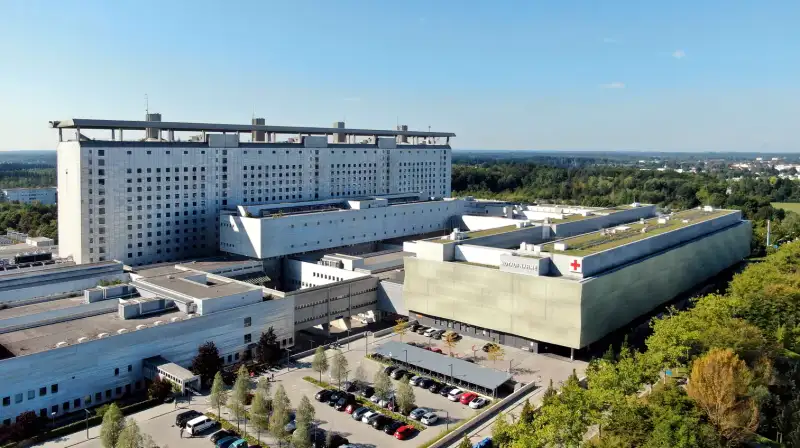
Krankenhaus Sanatoriumsplatz 2 in München
Munich, Germany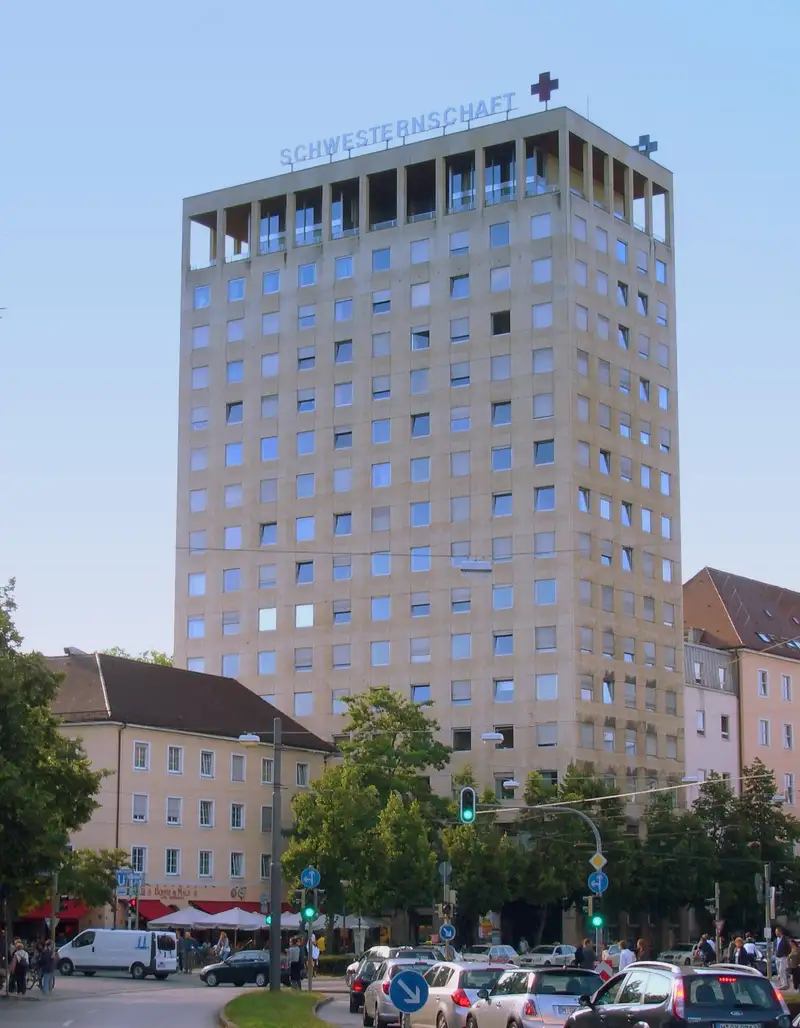
Rotkreuzklinikum München
Munich, Germany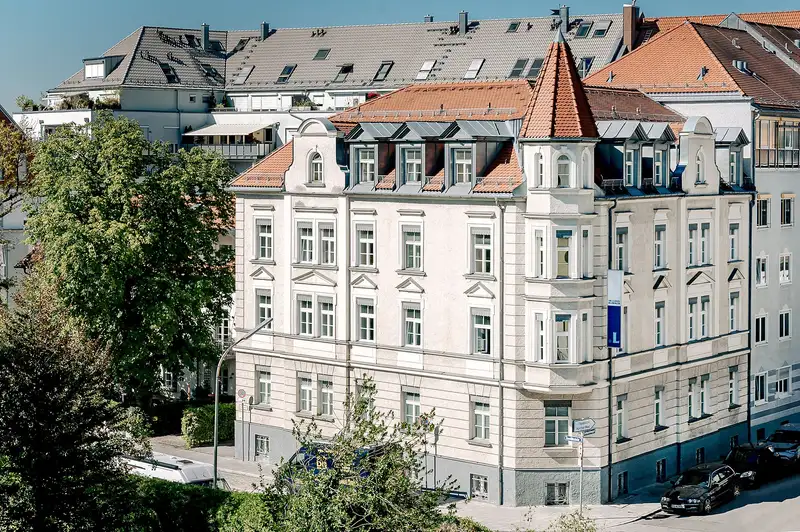
Dr. Lubos Kliniken Pasing
Munich, Germany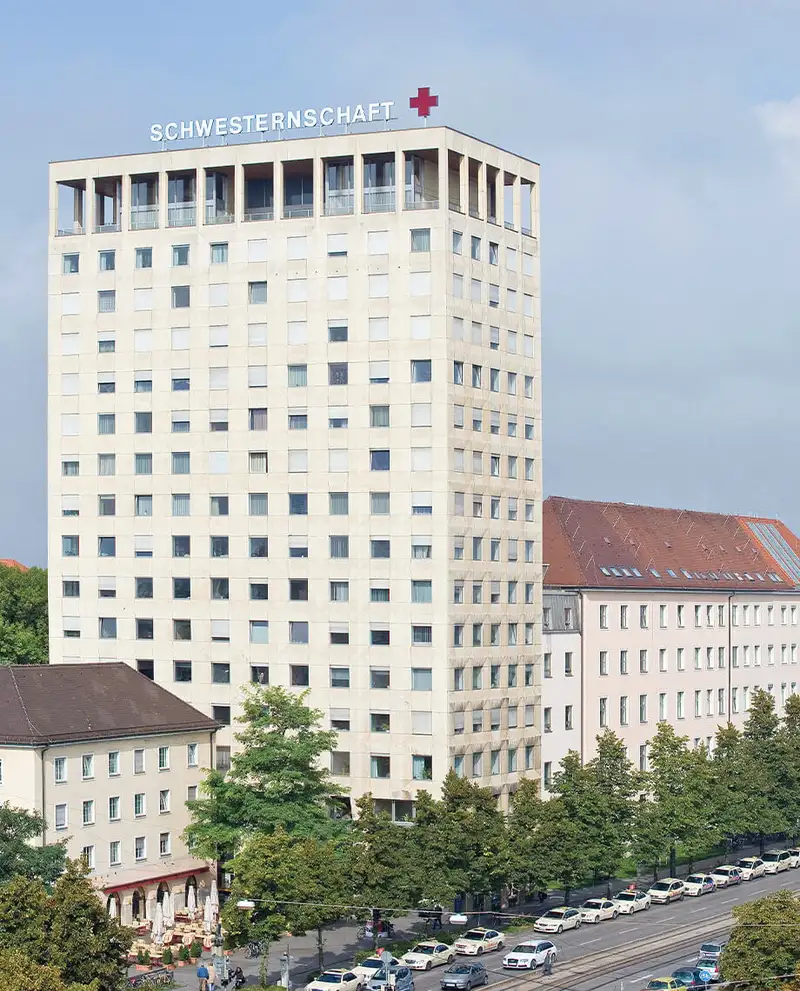
Krankenhaus Rheingoldstraße 6; Rheingoldstraße 8 in München
Munich, Germany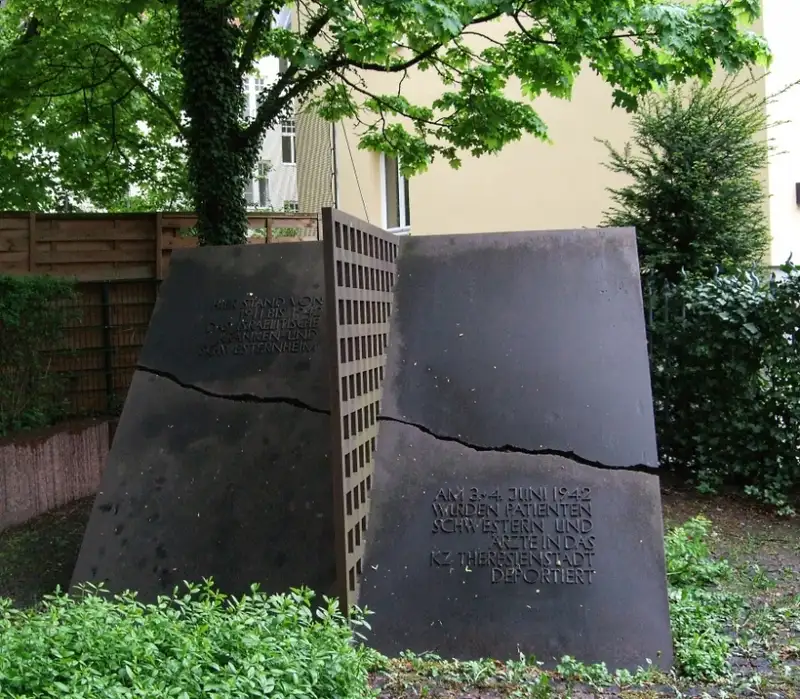
Israelitisches Kranken- und Schwesternheim
Munich, Germany03 · Full directory
All hospitals in Munich
- 07 Krankenhaus Kölner Platz 1 in München
- 08 Krankenhaus Wolfratshauser Straße 99 in München
- 09 Artemed Klinikum München Süd
- 10 Schön Klinik München Schwabing
- 11 Heilanstalt Neufriedenheim
- 12 Helios Klinikum München West
- 13 Dr. Lubos Kliniken Bogenhausen
- 14 Krankenhaus James-Loeb-Straße 2; Kölner Platz 1; Parzivalstraße 16 in München
- 15 Krankenhaus Lindwurmstraße 2 a in München
- 16 Krankenhaus Barmherzige Brüder
- 17 Klinikum Bogenhausen
- 18 Krankenhaus Josephinum München
- 19 Pettenkoferstraße 8a
- 20 Klinikum Schwabing
- 21 Frauenklinik in der Maistraße
- 22 Klinikum München Perlach
- 23 Klinikum Neuperlach
- 24 Krankenhaus Neuwittelsbach
- 25 TUM University Hospital German Heart Center
- 26 Nußbaumstraße 7
- 27 Rinecker Proton Therapy Center
- 28 Klinik Thalkirchner Straße
- 29 Richard-Wagner-Straße 19 (München)
- 30 Klinikum München Pasing
- 31 Harlaching Hospital
- 32 Augenklinik Herzog Carl Theodor
- 33 Rechts der Isar Hospital
- 34 Josephspital (Munich)
- 35 Militärlazarett in Munich
- 36 Klinikum Dritter Orden
- 37 Klinik Innenstadt
- 38 LMU Klinikum
- 39 HNO-Klinik Bogenhausen Dr. Gaertner
- 40 Krankenhaus Martha Maria
- 41 Klinik und Poliklinik für Psychiatrie und Psychotherapie
- 42 Klinik Augustinum München
- 43 Lindwurmstraße 2a
- 44 Kinderkrankenhaus Kölner Platz 1 in München
- 45 Krankenhaus Franz-Schrank-Straße 12; Menzinger Straße 48 in München
- 46 Klinikum Großhadern
- 47 Dr. von Hauner Children's Hospital
- 48 Isar Klinikum
- 49 Klinik mednord
- 50 Munich University Center for Children with Medical and Developmental Complexity
More in Germany
Other hospital cities in Germany
Compare Munich against the other medical-travel cities in Germany.
Travel + recovery
Getting to Germany and recovering well
Germany requires a Schengen short-stay visa (Type C, up to 90 days) for non-EU patients, or a Type D long-stay national visa for treatment over 90 days. Application is via the German consulate in your home country with the hospital's invitation letter, treatment plan, and proof of funds. Processing typically takes 2-6 weeks — book your appointment early.
Frankfurt (FRA), Munich (MUC), Düsseldorf (DUS), and Berlin (BER) are major intercontinental hubs. Lufthansa, Turkish Airlines, KLM, and the Gulf carriers (Emirates, Qatar, Etihad) run dense connectivity from MENA, the GCC, South Asia, North America, and East Asia. Typical single-leg transit from origin: 6-9 hours from Dubai, 4 hours from Cairo, 8 hours from Mumbai, 9-10 hours from JFK.
German university hospitals run integrated recovery wings; Heidelberg, Berlin, Munich, and Hamburg have partner medical-hotel arrangements. Plan 10-21 days in-country between discharge and the flight home.
Germany is cool-temperate. Winters cold (-2 to 8°C), summers mild (18-25°C). Surgical patients usually prefer May-September for comfortable mobility during recovery; the German healthcare system runs full-tilt year-round regardless.
Practical city guide
Practical guide to Munich
Munich's healthcare includes Klinikum der Universität München (LMU), Klinikum rechts der Isar (Technical University of Munich), Klinikum Großhadern, and specialty private clinics. Strong tradition of complex specialty care.
The TUM Klinikum has world-class cardiac and complex oncology programs. LMU has comprehensive specialty care across all major sub-specialties.
Hospital clusters by neighborhood
Großhadern
Klinikum Großhadern (LMU campus).
Innenstadt
Klinikum LMU Innenstadt.
Ismaning
Klinikum rechts der Isar (TUM).
Airport + transit
Airport: Munich (MUC).
MUC to central Munich: 40-60 min by S-Bahn.
Public transit excellent. S-Bahn from airport efficient.
Climate
Continental. Cold winters (-3 to 3°C). Mild summers (15-25°C). May-September most pleasant.
Where to stay during recovery
Maxvorstadt / Schwabing
Central, walkable, premium hotels (Bayerischer Hof, Mandarin Oriental).
Au-Haidhausen
Quieter, near River Isar, mid-range.
Recovery-friendly activities
- English Garden (Englischer Garten) — 900 acres, paths.
- Marienplatz / Old Town walking.
- Isar River paths.
- Olympiapark.
- Botanical Gardens.
Food + accommodation
Food: Bavarian + international. Beer gardens, fine dining.
Accommodation: Premium ($250-550): Bayerischer Hof, Mandarin Oriental, Hotel Vier Jahreszeiten. Mid-tier ($150-280): Holiday Inn, Marriott.
Practical notes
English at hospitals and hotels. Cards accepted. Public transit world-class. Generally safe.
Methodology and editorial standards
This Munich medical-tourism overview is rebuilt from the city's currently-active accredited hospitals, surgeon credential checks, and verified flight-connectivity data. Climate and recovery-window guidance is informed by case-manager experience moving patients in and out of Munich year-round.
- Hospital data. Accreditation, licences and facilities are checked against public registries (JCI, NABH, health-ministry licence lists) and hospital documents, and rechecked regularly.
- Doctor credentials. Qualifications and specialty come from the doctor's hospital profile and national medical council registers.
- Prices. Price ranges come from written hospital quotes and packages, not advertised rates.
- Clinical text. Written by our editorial team and checked against current published guidelines before it goes live.
- Independence. Hospitals cannot pay to change their position on our pages.
Next step · Munich
Ready when you are.
Three ways forward. Pick the one that fits where you are right now.
Munich medical travel
Browse Munich the way that fits your case
Same hospitals, different cuts. Pick the lens that matches what you're deciding on — destination, specialty, surgeon, or visa logistics.
- Hospitals All hospitals in Munich 50 programs in Munich, with photos and pricing.
- Destination Germany hospital hub Featured programs and pricing benchmarks across Germany.
- Visa Germany medical visa Documents, processing time, embassy guidance.
- Specialty Urology in Munich 54 hospitals credentialed for urology.
- Specialty ENT / Otolaryngology care 54 hospitals priced for this specialty.
- Specialty Orthopedics hub 54 programs with relevant credentials.
- Browse All 88 procedures Cost ranges, recovery time, and success rates per procedure.
- Browse All destinations Compare 9 medical-travel destination countries.
- Compare Hospital comparison Side-by-side accreditations, ratings, beds, and pricing.
- Tool Cost calculator Hospital-reported pricing across procedures × destinations.
- Tool Match-me triage Three questions, get a specialty + destination + 3-hospital shortlist.
- Action Free second opinion Independent panel review of your case in 48 hours — no charge.