2026 ranking
Best hospitals for Leadless Pacemaker (Micra) in 🇩🇪 Germany
8 hospitals from the Medcasts database, ordered by centre-of-excellence status, patient rating and review count. Use it as a shortlist, not a verdict.
Methodology: how we rank · pricing
- Hospitals ranked
- 8Hospitals ranked
- Average rating
- 4.6Average rating
-
 01 Gold Charité — Universitätsmedizin Berlin
Why #1: Center of Excellence in leadless pacemaker (micra) · 4.6 rating across 220 reviews
Europe's largest university hospital. Global leader in cardiology, oncology, neurology, and research-driven medicine. Founded in 1710, the hospital sits in Berlin, Germany. Clinical focus spans cardiac surgery, orthopedi…
★ 4.6 · 220 reviews 3,011 beds Est. 1710From$52,610all-in · case-specific -
 02 Silver Klinikum rechts der Isar (TUM)
Why #2: Center of Excellence in leadless pacemaker (micra) · 4.6 rating across 170 reviews
University hospital of the Technical University of Munich. Leading oncology, cardiac, and transplant center in southern Germany. Founded in 1834, the hospital sits in Munich, Germany. Clinical focus spans cardiac surgery…
★ 4.6 · 170 reviews 1,161 beds Est. 1834From$47,760all-in · case-specific -
 03 Bronze Bundeswehrkrankenhaus Hamburg
Why #3: Established 1958 — long institutional track record
Bundeswehrkrankenhaus Hamburg operates in Hamburg, Germany, a reference market for complex European medical travel. It handles a mix of domestic and international cases. It opened in 1958. Departments include cardiac sur…
Est. 1958From$46,660all-in · case-specific -
 04 Deutsches Herzzentrum Berlin
Why #4: Established 1986 — long institutional track record
The Deutsches Herzzentrum Berlin (DHZB) is a medical research centre in Berlin, Germany, specialised in cardiovascular disease, as well as cardiopulmonary transplantation. The hospital has two CMR scanners. A new heart c…
Est. 1986From$46,750all-in · case-specific -
 05 Charité
Why #5: Established 1710 — long institutional track record
The Charité – Universitätsmedizin Berlin (Charité – University Medicine Berlin; French: [ʃaʁite] ) is a public medical school and hospital in Berlin, Germany. It is the largest university hospital in Europe. The medical …
Est. 1710From$48,240all-in · case-specific -
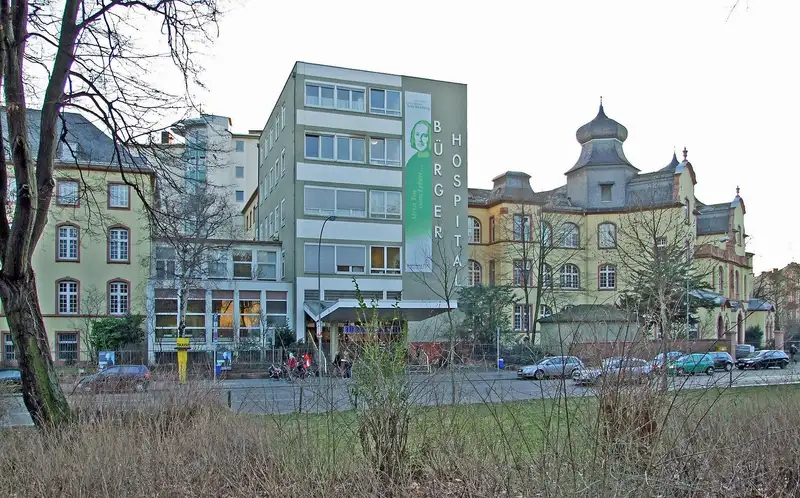 06 Bürgerhospital Frankfurt am Main
Why #6: Established 1779 — long institutional track record
Based in Frankfurt, Bürgerhospital Frankfurt am Main is a hospital working across 9 clinical specialties. It opened in 1779. The clinical footprint includes cardiac surgery, orthopedics, and oncology. Third-party accredi…
Est. 1779From$48,340all-in · case-specific -
 07 Gertraudenhospital
Why #7: Verified accreditation, transparent pricing, dedicated international patient desk
Gertraudenhospital runs from Berlin, Germany. Patients travel here primarily for cardiac surgery. Departments include cardiac surgery, orthopedics, and oncology plus 6 more. Quality marks: ISO 9001, KTQ. If you're planni…
From$49,920all-in · case-specific -
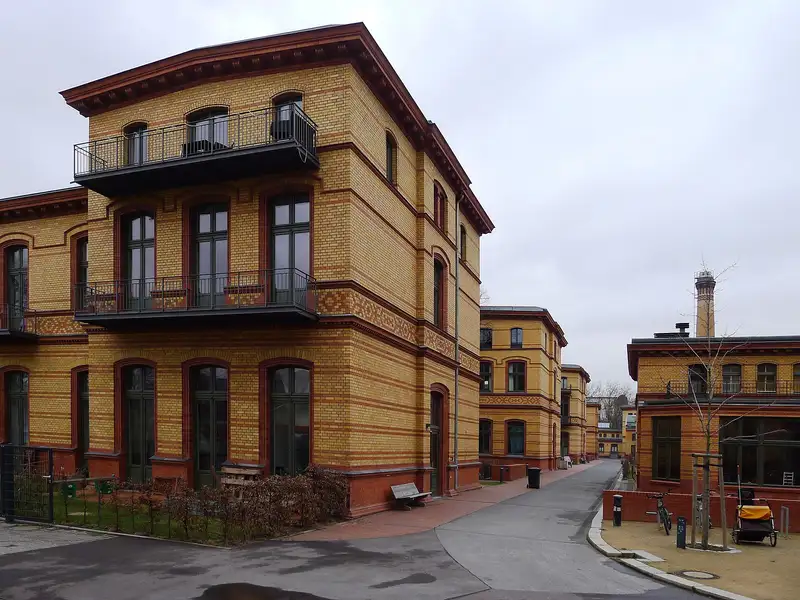 08 Krankenhaus Am Urban
Why #8: Established 1887 — long institutional track record
Krankenhaus Am Urban — a Berlin hospital with cardiac surgery among its busier departments. It opened in 1887. Core clinical activity runs through cardiac surgery, orthopedics, and oncology. ISO 9001 certification is in …
Est. 1887From$51,500all-in · case-specific
How this list is ordered
What decides the order
Hospitals are sorted by these database fields, in this order. Nothing else is weighted.
We do not score outcomes, surgeon case volume or publications. Ask each hospital for surgeon-level case numbers before you decide.
- 1Centre-of-excellence flag
Hospitals marked as a centre of excellence for this specialty come first.
- 2Patient rating
A higher average rating ranks higher.
- 3Number of reviews
Breaks ties between hospitals with the same rating.
- 4Lowest listed price
For a single procedure, a lower listed starting price breaks any remaining tie.
What this list isn't
Rating ≠ outcome
A hospital ranking is a qualifying filter, not a prediction of your outcome. Within any listed hospital, your outcome is shaped by your specific surgeon's volume, the program's protocol for your indication, and your own clinical baseline. Always ask for surgeon-level data — case volume per year, conversion rate, infection rate — before committing.
Next step · Leadless Pacemaker (Micra)
Ready when you are.
Three ways forward. Pick the one that fits where you are right now.
Destination · Germany
Why patients choose Germany for leadless pacemaker (micra) (cardiac surgery)
Germany operates the most rigorous training and quality-control pathway in continental Europe — the Facharzt specialist credential takes 5-6 years post-medical-school, and university-affiliated centres (Charité Berlin, Heidelberg, Hamburg-Eppendorf, Munich, Aachen) handle Europe's most complex referrals. Germany is the answer for leadless pacemaker (micra) when you need genuinely complex multidisciplinary care — neuro-oncology, cardiac re-do operations, transplant, rare-disease workups — and you're willing to pay for surgical depth that's hard to source elsewhere.
- 01
University hospitals run weekly multidisciplinary tumor boards as a regulatory requirement, not a marketing point — every cancer case is reviewed by the full panel before treatment.
- 02
Strict implant traceability law (the Medizinproduktegesetz) means every device used in your surgery is logged, recallable, and supplier-verifiable for 30+ years.
- 03
Most senior surgeons publish in peer-reviewed journals annually and run named research lines — credentials are auditable.
- 04
Lufthansa, KLM, and Turkish Airlines run dense connectivity from MENA, the GCC, and South Asia into Frankfurt, Munich, and Düsseldorf — typical 6-9 hour single-leg from origin.
Cost note. Pricing reflects fully-loaded EU clinical labour, regulatory compliance, and university-level overhead — typically 10-30% below US list but at the top of European destinations.
How to use this list
What to look for
- Surgeon's personal annual case volume on your specific procedure (not just institutional volume).
- Heart-team review documented in writing for major cases.
- 30-day mortality rate published, broken out by procedure and risk class (EuroSCORE/STS).
- Perfusion-team experience (often discussed with the surgical team during pre-op).
- ICU step-down capability with cardiac intensivist on call 24/7.
- Re-do or complex aortic experience for higher-risk cases.
Volume benchmarks
Surgeon volume benchmarks
Travel timing
When to travel to Germany
Peak window: May, June, September
Late spring through early fall is the most comfortable time. Summer (July–August) is pleasant but tourism peak. Winter is fine but cold and short days; recovery accommodation should be heated reliably (most German hotels are).
Questions
What to ask each program on this list
- 01
What's the surgeon's annual case volume on my specific procedure?
- 02
What's the 30-day mortality rate for elective cases at your program?
- 03
Does heart-team review happen for every major case, and can I see the recommendation in writing?
- 04
What's your repair rate for mitral surgery (if applicable)?
- 05
What's your conversion-from-minimally-invasive-to-open rate?
- 06
What's your protocol if I deteriorate post-op — is there a cardiac intensivist on call 24/7?
Adjacent rankings
Other ways to slice Leadless Pacemaker (Micra) in Germany
Best-of lists are one cut. These hubs let you re-rank by destination, by city, by surgeon volume, or by procedure.
- Procedure Leadless Pacemaker (Micra) overview All leadless pacemaker (micra) programs across all destinations.
- Procedure cost Leadless Pacemaker (Micra) cost in Germany Hospital-reported pricing, stay, recovery for Germany programs.
- Destination Germany hospital hub Featured programs and pricing benchmarks for Germany.
- Surgeons Cardiac Surgery surgeons Volume-ranked physician directory across all destinations.
- Surgeons Cardiac Surgery surgeons in Germany Filtered to Germany-based programs only.
- Hospitals All Germany hospitals Filter by city, specialty, accreditation, beds.
- Hospitals Hospitals filtered by Cardiac Surgery Programs credentialed for cardiac surgery across all destinations.
- Browse Other best-of rankings All specialty × country ranking combinations.
- Compare Hospital comparison Side-by-side accreditations, ratings, beds, and pricing for up to 4 hospitals.
- Compare Doctor comparison Surgeons compared on volume, fees, languages, video-consult availability.
- Tool Cost calculator Hospital-reported pricing for cardiac surgery procedures across destinations.
- Tool Match-me triage Three questions, get a specialty + destination + 3-hospital shortlist.
- Trust Editorial policy Methodology behind ranking, AI disclosure, corrections SLA.