2026 ranking
Best hospitals for TomoTherapy in 🇲🇾 Malaysia
Hospitali 8 kutoka hifadhidata ya Medcasts, zimepangwa kwa hadhi ya kituo cha ubora, ukadiriaji wa wagonjwa na idadi ya maoni. Itumie kama orodha fupi ya kuanzia, si uamuzi wa mwisho.
Methodology: how we rank · pricing
- Hospitali zilizopimwa
- 8Hospitali zilizopimwa
- Wastani wa ukadiriaji
- 4.5Wastani wa ukadiriaji
-
 01 Dhahabu Prince Court Medical Centre
Why #1: Center of Excellence in tomotherapy · 4.5 rating across 230 reviews
JCI-accredited 277-bed hospital in Kuala Lumpur, regularly ranked among the world's top medical-tourism destinations. Founded in 2007, the hospital sits in Kuala Lumpur, Malaysia. Clinical focus spans cardiac surgery, on…
★ 4.5 · 230 reviews 277 beds Est. 2007From$14,730all-in · case-specific -
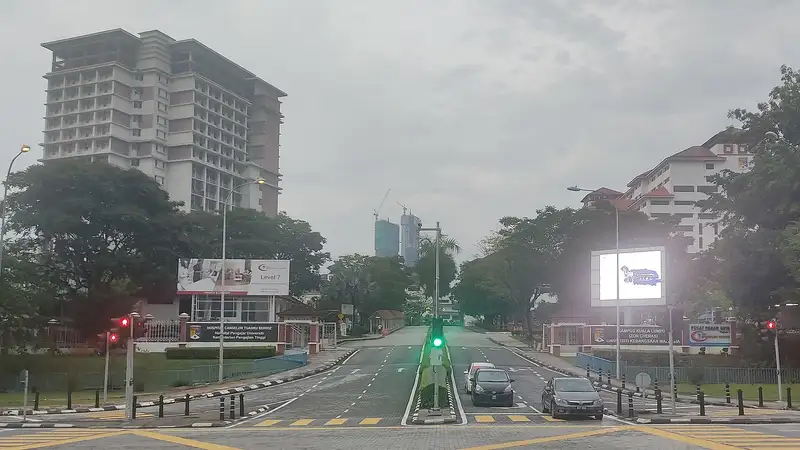 02 Fedha University Kebangsaan Malaysia Medical Centre
Why #2: Established 1976 — long institutional track record
Hospital Canselor Tuanku Muhriz UKM (English: Tuanku Muhriz Chancellor Hospital) or HCTM, formerly known as Pusat Perubatan Universiti Kebangsaan Malaysia (PPUKM, National University of Malaysia Medical Centre), is one o…
Est. 1976From$12,410all-in · case-specific -
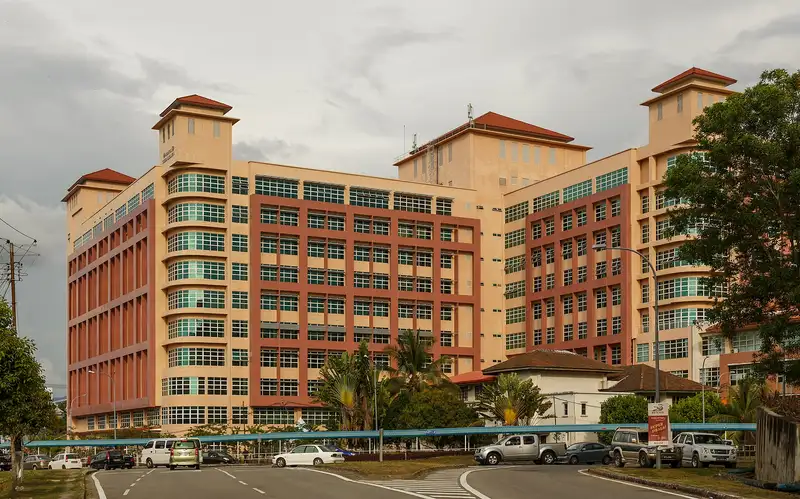 03 Shaba Queen Elizabeth Hospital, Kota Kinabalu
Why #3: Established 1981 — long institutional track record
The Queen Elizabeth Hospital (Malay: Hospital Queen Elizabeth) in Kota Kinabalu, Sabah is the main hospital for the city and the whole Sabah. It is named after Queen Elizabeth II. Founded in 1981, the hospital sits in Ko…
Est. 1981From$12,830all-in · case-specific -
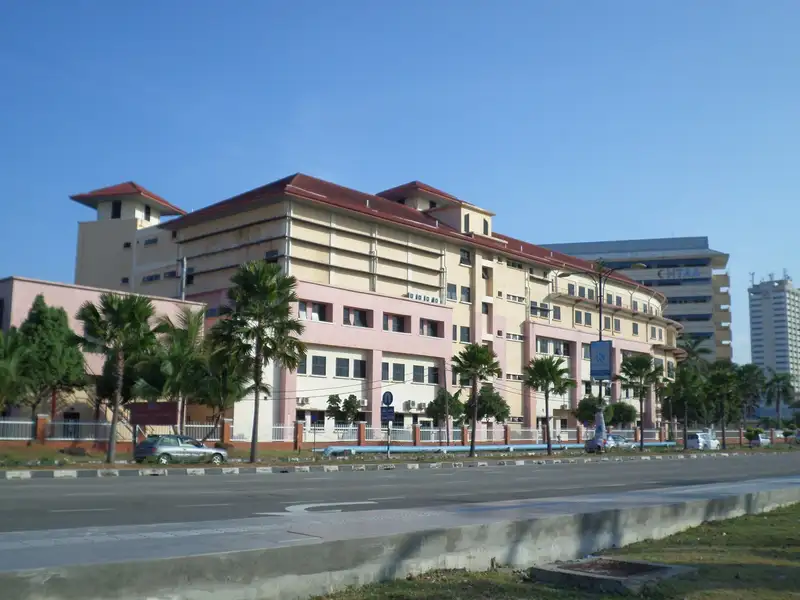 04 Hospital Tengku Ampuan Afzan
Why #4: Established 1983 — long institutional track record
Tengku Ampuan Afzan Hospital is a government funded district general hospital in Kuantan, Pahang, Malaysia. Tengku Ampuan Afzan Hospital opened in 1983. It had 851 beds. Founded in 1983, the hospital sits in Kuantan, Mal…
Est. 1983From$13,300all-in · case-specific -
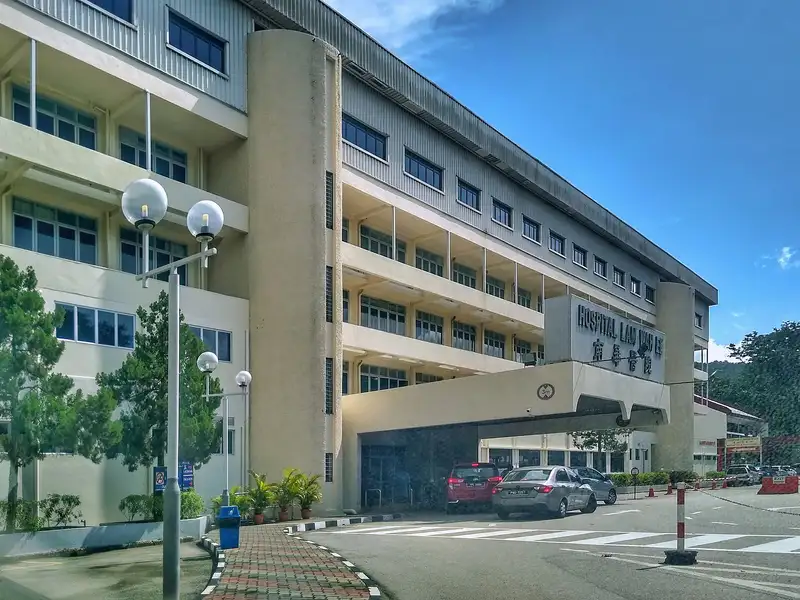 05 Lam Wah Ee Hospital
Why #5: Established 1883 — long institutional track record
Lam Wah Ee Hospital (simplified Chinese: 南华医院; traditional Chinese: 南華醫院; pinyin: Nán Huá Yī Yuàn) is a non-profit hospital in George Town within the Malaysian state of Penang. The 700-bed tertiary acute care hospital is…
Est. 1883From$13,720all-in · case-specific -
 06 Penang Adventist Hospital
Why #6: Established 1924 — long institutional track record
Penang Adventist Hospital (Malay: Hospital Adventist, Chinese: 槟安医院) is a non-profit hospital in George Town within the Malaysian state of Penang. Established in 1924, the 200-bed medical institution is part of an intern…
Est. 1924From$14,190all-in · case-specific -
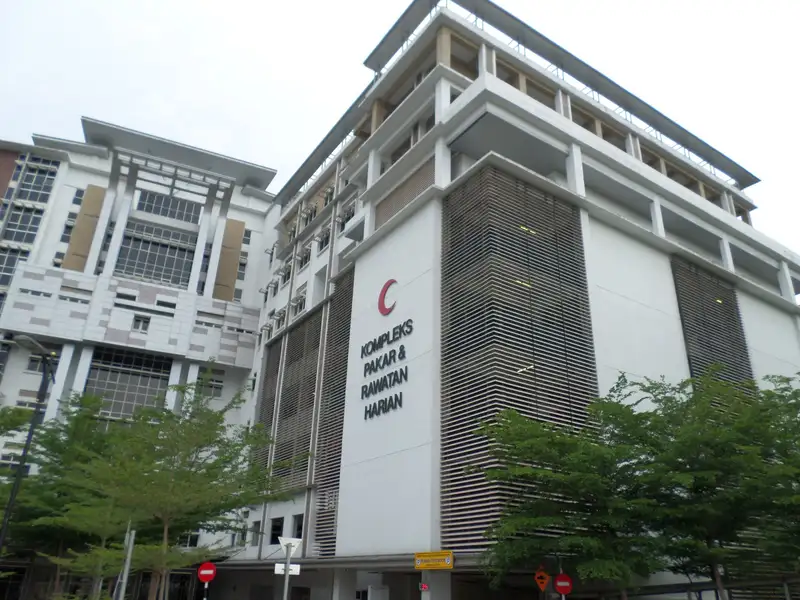 07 Kuala Lumpur Hospital
Why #7: Established 1870 — long institutional track record
Kuala Lumpur Hospital (Malay: Hospital Kuala Lumpur, abbr: HKL) is the largest government-owned public hospital and higher specialised hospital in Kuala Lumpur, the capital city of Malaysia. It opened in 1870. HKL is a n…
Est. 1870From$14,220all-in · case-specific -
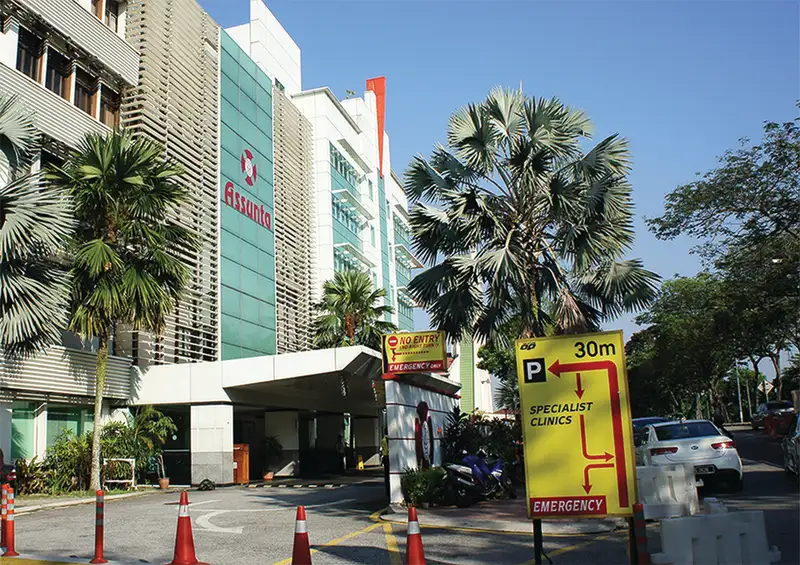 08 Assunta Hospital
Why #8: Established 1954 — long institutional track record
Assunta Hospital (Chinese: 亞松大医院; Malay: Hospital Assunta) is the first private hospital in Petaling Jaya, Petaling District, Selangor, Malaysia. Assunta Hospital was founded by a group of missionaries from the Francisca…
Est. 1954From$14,610all-in · case-specific
Jinsi orodha hii inavyopangwa
Kinachoamua mpangilio
Hospitali hupangwa kwa sehemu hizi za hifadhidata yetu, kwa mfuatano huu. Hakuna kingine kinachopimwa.
Hatupimi matokeo ya matibabu, idadi ya upasuaji wa daktari wala machapisho. Uliza kila hospitali idadi ya kesi za kila daktari kabla ya kuamua.
- 1Hadhi ya kituo cha ubora
Hospitali zilizotambuliwa kama kituo cha ubora kwa utaalamu huu huja kwanza.
- 2Ukadiriaji wa wagonjwa
Wastani wa juu wa ukadiriaji hupanda juu zaidi.
- 3Idadi ya maoni
Huamua sare kati ya hospitali zenye ukadiriaji sawa.
- 4Bei ya chini iliyoorodheshwa
Kwa utaratibu mmoja, bei ya kuanzia iliyo chini huamua sare iliyobaki.
What this list isn't
Rating ≠ outcome
A hospital ranking is a qualifying filter, not a prediction of your outcome. Within any listed hospital, your outcome is shaped by your specific surgeon's volume, the program's protocol for your indication, and your own clinical baseline. Always ask for surgeon-level data — case volume per year, conversion rate, infection rate — before committing.
Hatua inayofuata · TomoTherapy
Tuko tayari ukiwa tayari.
Njia tatu za kuendelea. Chagua inayokufaa sasa hivi.
Destination · Malaysia
Why patients choose Malaysia for tomotherapy (oncology)
Malaysia is a quietly strong mid-cost Asian destination — Kuala Lumpur and Penang host JCI-accredited hospitals (Sunway, KPJ, Pantai, Gleneagles, Prince Court) where US-trained consultants run programs at 30-50% below Singapore pricing. For tomotherapy, Malaysia is increasingly chosen by Indonesian, Bangladeshi, Vietnamese, GCC, and Australian patients who want Singapore-adjacent quality without Singapore-level pricing.
- 01
English is the universal medical language; consultants are typically Royal College-trained (UK/Ireland) or US-board-certified.
- 02
Malaysian Healthcare Travel Council is a government-backed body that vets and lists participating hospitals — a useful primary trust signal.
- 03
Penang is a meaningful sub-hub for orthopedic, cardiac, and oncology cases, with attached recovery hospitality on the island.
- 04
Visa-free entry for 150+ nationalities; a dedicated Health Travel Visa was introduced in 2023 for stays up to a year.
Cost note. Ringgit parity, low local labour cost, and government-subsidised infrastructure produce stable pricing 30-50% below Singapore.
How to use this list
What to look for
- Multidisciplinary tumor board meeting weekly; recommendations in writing.
- Pathology lab capable of full molecular profiling (HER2, EGFR, BRAF, BRCA, MSI, PD-L1, comprehensive genomic profiling).
- Treatment regimens benchmarked against published guidelines for your specific cancer.
- Annual case volume on your specific cancer (not just 'cancer treatment').
- Clinical trial access for relevant indications.
- Supportive care infrastructure (antiemetic protocols, neutropenic support, transfusion access).
- Communication infrastructure for shared care with home oncologist.
Volume benchmarks
Surgeon volume benchmarks
Travel timing
When to travel to Malaysia
Peak window: February, March, April, May, June, July, August, September
Avoid: November, December, January
Hot tropical year-round (26–32°C). Wettest months November–January in west Malaysia. Generally consistent travel conditions.
Questions
What to ask each program on this list
- 01
Has my case been to tumor board, and can I see the recommendation in writing?
- 02
What molecular markers have been tested on my tissue, and which determined the treatment plan?
- 03
What's the goal of this treatment — curative, prolonging, or palliative — and how is success measured?
- 04
What's your annual volume on my specific cancer?
- 05
What's the side-effect profile of this regimen, and what's the supportive-care plan?
- 06
How will my home oncologist receive treatment summary and continue care?
Adjacent rankings
Other ways to slice TomoTherapy in Malaysia
Best-of lists are one cut. These hubs let you re-rank by destination, by city, by surgeon volume, or by procedure.
- Procedure TomoTherapy overview All tomotherapy programs across all destinations.
- Procedure cost TomoTherapy cost in Malaysia Hospital-reported pricing, stay, recovery for Malaysia programs.
- Destination Malaysia hospital hub Featured programs and pricing benchmarks for Malaysia.
- Surgeons Oncology surgeons Volume-ranked physician directory across all destinations.
- Surgeons Oncology surgeons in Malaysia Filtered to Malaysia-based programs only.
- Hospitals All Malaysia hospitals Filter by city, specialty, accreditation, beds.
- Hospitals Hospitals filtered by Oncology Programs credentialed for oncology across all destinations.
- Browse Other best-of rankings All specialty × country ranking combinations.
- Compare Hospital comparison Side-by-side accreditations, ratings, beds, and pricing for up to 4 hospitals.
- Compare Doctor comparison Surgeons compared on volume, fees, languages, video-consult availability.
- Tool Cost calculator Hospital-reported pricing for oncology procedures across destinations.
- Tool Match-me triage Three questions, get a specialty + destination + 3-hospital shortlist.
- Trust Editorial policy Methodology behind ranking, AI disclosure, corrections SLA.